You might have noticed I’ve been quiet on the Coaching Digest front for the last few months. There’s a reason. I’ve jokingly said of late that “I’m Cinderella.” Quick pause here – which vision of Cinderella did you get? When I said that to one of my clients, he immediately went to the beautiful version on the arm of the prince. But nope. Instead, I’ve been on my knees scrubbing everything from porches to garage floors. Knee pads would have been helpful, but I am sporting some functional calluses on my knees!
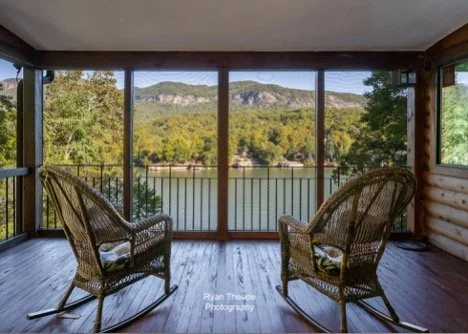
Why have I been scrubbing? We decided a while back to build a house on Mystic Waters. It’s a dream ten years in the making. What took us so long? Well, getting our current house ready to sell! The house went on the market this week, and it’s as clean and ready as it was the day we moved in over 26 years ago.
Getting to this point has been even more complicated than we first thought it would be – and that’s the point of this issue of the Coaching Digest: a practice I call “first thought, second thought.” One particular incident brought the lesson home.
This one hit me between the eyes when I broke a slat on my blinds. It happened so fast. I was simply moving one of the chairs back onto the porch that was sporting fresh stain. Some part of the chair caught the blind, and before I could register what was happening, a piece of said blind was on the floor.
Context matters, and in this case, there were several critical points floating around. First, I had learned the week before that these blinds, which I was considering getting more of, were no longer made. Second, we had been in the painting and staining process for almost two months. I was tired and ready to be done. Third, we had been working with our builders to fix all the broken things in the house. The last thing I needed to do was break things.
So when I saw the piece of blind on the floor and looked at my beautiful blinds which now looked like a snaggled tooth monster on the window of a third-rate mobile home, my first thought was dark.
Sometimes, I can catch that first thought quickly and pivot to a more useful second thought. In this case, it took me a minute. Or ten.
The first thought tends to either over or under react, focusing on the noise. The second thought seeks the signal in the noise, which gives us a chance to respond to what is really happening.
My first conscious thought, a weak attempt to steer me away from the dark void, was to tell myself, “I can glue it!” I quickly realized that would be near impossible. For a quick moment, I considered replacing all the blinds in the room. Not only would that be expensive, but remember, these blinds are really good, and the substitutes would be worse. Then I remembered that the builders were onsite -maybe they could help. When I went to find them, I discovered they were fully occupied. Help would have to wait. For a moment, I had that “all is lost” feeling and could see that my brain wanted to race to full on collapse into the void.
Thanks to practicing “first thought, second thought” under pressure for many years, I was able to pivot. The dead ends gave me a moment to pause. I took a deep breath and looked at the situation, and asked myself, “What is possible here?” There were excess slats on the bottom. I had rebuilt blinds before. Take out the bad slat and move the rest up. Once done, it will look the same. The solution might be tedious, but it was doable.
We had a rainy day coming up on a Sunday, and suddenly I was looking forward to spending some time with a cup of tea and a football game while I took apart the blinds and put them back together again.
Notwithstanding my awareness that I could fix this, my brain still wandered into catastrophe thinking. In the days leading up to Sunday, I looked at the gap in the slats and noticed my first and then second thought. First thought – “Lynn, what an idiot, you should have been more careful with the chair, yada, yada, yada.” Second thought, “What a fun rainy day project to look forward to. Same idea as doing art – enjoy the process.”
The day came, and I sat down on the floor and took one tiny step at a time. Remove the cap. Undo the knot. Pull the string. Replace the broken slat. Thread everything back together. With each step, I gave myself a little pat on the back. Each step was small enough to manage, even if the whole project had seemed overwhelming.
Within an hour and a half, you could never tell anything was wrong.
In the end, I was grateful that I had not acted on any of my first thoughts. My second thought was informed by the reality of the situation, not my worst fears.
The point isn't to replace a negative thought with a positive one. It's to pause long enough to find the signal in the noise.
I’m not going to say that second thought won out every time; however, it DID win most of the time and that’s how a practice changes us one thought at a time.
While the blind experience stood out for me in the three months that we deeply focused on getting our house decluttered, fixed, cleaned, I had hundreds of similar experiences. After the rollercoaster of all the work, we came out with a house ready to welcome new owners AND I also had built stronger mental tools, able to function even better under the pressure of things not going perfectly all the time.
When I say that pressure can either crush us or elevate us, it’s this kind of experience I’m talking about. Had I stuck with my first thought, I might still be down on myself. Following my hard-earned second thought reminds me every time I look at the blinds, that the answer is in the problem, if I will only take the time to breathe, gather myself and look. The bonus is stronger mental tools, which only come on the other side of pressure.
Where could you use a second thought? What situation has you down on yourself or missing the whole picture? What would it be like if you could see that situation with new eyes?